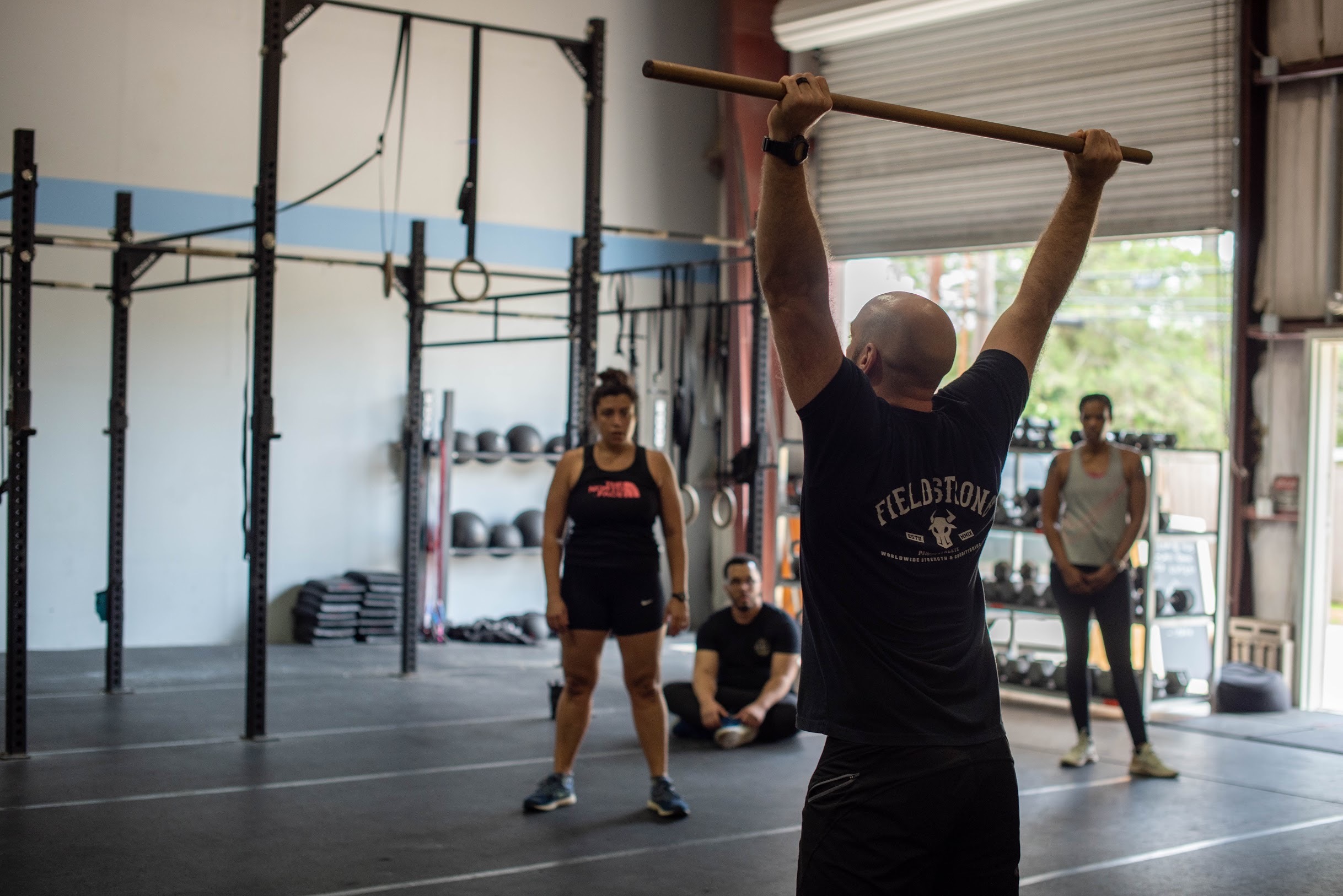
Before TeamBuildr OS, I ran a gym. Most of what I know about leadership didn't come from a book. It came from a room full of barbells, a handful of coaches who trusted me with their paychecks, and years of trial and error I'd rather not repeat.
This is part one of a two-part series on leadership for gym owners. This post is about your staff and trainers — the people you hire, train, and hand your business to when you're not in the room. Part two is about your members and the community you build around them.
I'll start with something I actually got right.
The onboarding system I'm still proud of
I was diligent about how I brought new coaches in, and looking back, it's the one piece of leadership I'd tell any gym owner to copy almost exactly.
New coaches shadowed me for a few weeks before they touched a class on their own. They watched how a session ran, how I liked things coached, and they got comfortable being around the membership before they were responsible for it. Once their questions started dropping off mid-session, that was my sign they were ready for more.
So I'd hand them the warm-up while I ran the main lift and the conditioning work. Once they had that down, they'd take the warm-up and the main session, and I'd take the cool-down. Eventually they ran the whole thing, start to finish, while I sat in the back of the room for a couple sessions. I wasn’t coaching, just there in case something came up they weren't ready for yet.
The whole arc usually took two to four weeks, depending on their experience and honestly, their comfort with public speaking, because that's most of what coaching a group class is. There was no hard checklist that told me someone was ready. I just watched them get there.
I also ran education seminars whenever I noticed a gap in our technical knowledge as a staff. An example would be a deep dive on coaching the Olympic lifts with small homework assignments so people actually applied what they'd learned instead of just nodding along.
The takeaway here is that onboarding isn’t just about getting a couple more classes off of your workload when a new coach is ready. It’s your first real opportunity to show them what’s important to you. If being the best technical coach is important to you, bake that into your process. If it’s important to you that your members enjoy themselves thoroughly every time they come through the doors, write out how you currently do that. It’s less about training a coach how to cue a squat, although that is important, it’s more about defining and showing them what a good coach is in your business.
The mistake that taught me more than anything else
Here's the one that still makes me wince a little.
I had a trainer who wanted more responsibility, so I promoted her to general manager. In my head, that was a huge deal. I was handing her a piece of the business I'd built. What I didn't do was define where her role stopped and mine started. No documented processes, no clear workflows, just a title and an assumption that she'd figure it out the way I would have.
She didn't fail. I failed to give her anything to succeed with. Every question became "let me check with Trent," which pulled me right back into the parts of the business I was trying to hand off in the first place. It wasn't that she cared less than I did, it's that I'd never given her the guardrails that would let her operate with any real autonomy. Without those, of course she was going to check with me on everything. I made the careless assumption that she would pick up what she needed as she went, but she didn’t really even know where she was supposed to go. If I was flying the plane while building it, she was trying to fly her own under-construction plane with a blindfold on.
If I did it again, I'd have written out exactly what her role covered versus mine. I would have handed her an explicit list of the actual workflows she'd own, like adding a new member profile, running a consult call, or handling a failed payment. And I'd have picked two or three numbers to measure her against: retention, attendance, some version of a member satisfaction score, since she was the one handling most of the member-facing decisions.
A promotion isn't just a new title on a business card. Without SOPs, key metrics, and a shared vision, you've handed someone a guessing game with your business on the line.
Friend or boss? You don't get to pick one
Small gyms make this harder than it needs to be, because you're close with your coaches in a way that doesn't exist in a bigger company. A disagreement between friends is just a disagreement. A disagreement between a boss and an employee has a lot more riding on it. Members might be watching, and there's a real chance you lose that person, or worse, end up in a legal mess over how it was handled.
I never actively managed that line. I mostly just tried to behave a certain way around my staff and hoped the boundary held on its own. I didn't do much socially with them outside of the occasional holiday event, which helped some. But I never sat down and said, out loud, "here's what this relationship looks like at work versus outside of it."
One of my coaches is still one of my closest friends today. He'd started showing up late to class, and I was hearing he'd gotten hands-off in his coaching with his sessions turning into social hours as opposed to structured workouts. When I finally brought it up, he got uncomfortable fast, because I was suddenly speaking to him as his boss instead of his friend, and I hadn't warned him that the switch was coming. It probably did feel like it came out of nowhere. That's on me, not him.
Say the thing nobody wants to say
If I had to boil down everything I learned about leading staff into one line, it's this: say the thing nobody wants to say.
I had a standard for how my staff should show up, and when they didn't meet it, I either took it out on them passive-aggressively or told myself I was overreacting and said nothing. Neither one works. Being explicit about expectations and boundaries isn't harsh. It's actually what makes everyone more comfortable, because they know exactly where the line is instead of guessing at it.
If you're still a one-person show and about to make your first hire, get the job outlined before you're in the interview, not while you're onboarding them.
Map out onboarding too. In detail, write out how members will get used to a new face, and how the new coach will learn to run your sessions and talk to your members before you turn them loose.
And know your own gaps before you hire. If you don't know where you're weak as a leader, you'll probably hire someone who looks a lot like you, with the same holes. If you've never actually taught anyone to coach before, that's a good argument for hiring someone more seasoned, so you're not trying to build their technical foundation and your leadership skills at the same time.
Next up: leadership for your membership and the community you're building around them.